Care, in the work and between us
Between 10 and 19 November, Ankara became the setting for three very different gatherings: a workshop with Bilkent students, the final writing workshop of the British Institute at Ankara (BIAA) for early career researchers, and an evening lecture at Bilkent. I arrived thinking about each as a separate event. Looking back, I find myself connecting them through one word: care.
The first gathering was with Bilkent students, organised by the Bilkent Archaeology Club, where we talked about feminist archaeology, how our positions shape the questions we ask, how assumptions enter our interpretations, and whose work and experiences become visible in the stories we tell about the past. We turned those questions towards our own discipline. In a survey of archaeologists and students, 52.2% of the responses reported experiencing or witnessing discrimination based on gender, age, sexual identity or orientation during archaeological fieldwork (Doğan et al. 2023). Other figures I shared pointed to inequalities in who progresses through postgraduate study and academic positions, and who leads fieldwork. The numbers I am collecting right now as part of an ongoing project show that women hold about 35% of professorships in archaeology, while accounting for around 30% of excavation and survey directorships currently in Türkiye.
These patterns make me think about who produces archaeological knowledge, who mentors new generations of archaeologists, and who holds positions of authority and power. They are difficult to sit with, but they matter to me because I care deeply about archaeology, its questions, its possibilities, and the people who make it. Caring for a discipline includes paying attention to the conditions in which people study, work, teach, lead and feel able to remain in it. It means wanting archaeology to become more just and more intellectually open.
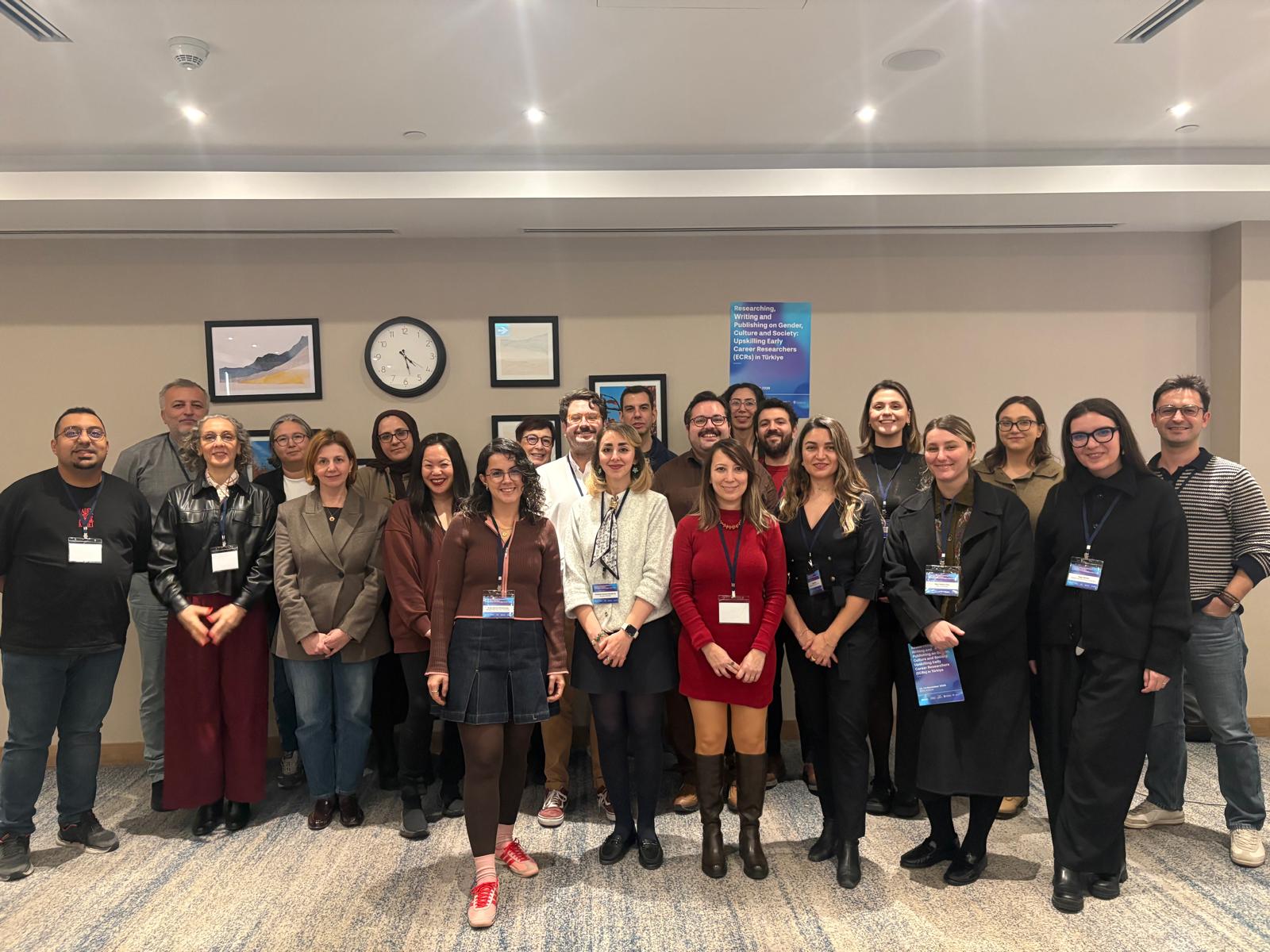
At the BIAA workshop, I presented my paper, which is currently in preparation, about gender, identity and difference in prehistory. The workshop brought together early career researchers from a range of disciplines, including history, political science, literature, sociology and anthropology, working on gender in Türkiye at a time of increasing anti-gender and anti-queer politics. In a way, it was a safe space for us to think, talk and write about gender, feminism, queerness, and so on, and feel a sense of belonging. What stayed with me most, though, was the experience of caring and being cared for.
The mentors asked questions about our projects and offered guidance on arguments, concepts, writing and publication. I also felt care moving between the participants. We listened closely, responded to one another’s ideas and tried to offer feedback that could help each person take a next step. Our disciplinary differences gave us new angles on each other’s work. We also shared difficult experiences, warned one another about particular settings and exchanged practical advice. That felt like true solidarity.
The BIAA describes the programme as a space for developing researchers’ writing and publication plans while building a supportive network across gender, culture and society research in Türkiye. What I will remember most vividly is how care was practised in the room through attention, encouragement, generosity and friendship.
The week ended with my evening lecture at Bilkent, 'Intimate identities'. I spoke about how intimacy and care can shape identity, and how small objects such as beads might help us trace relationships between people. An ornament could be made, worn, altered, kept or passed on, and its significance might be carried through those relationships and acts. After a week of teaching and writing with others, these ideas felt especially close. I had been thinking about care in the past while experiencing some of its forms in the present: listening closely, sharing knowledge, making room for someone else’s work and helping one another continue.
The three events brought different people and questions into focus, from students learning to question archaeological narratives to researchers supporting one another’s writing and an audience thinking with me about the intimate histories of objects. Together, they reminded me that care belongs in the everyday practice of archaeology, in how we teach, how we write, how we respond to each other, and how we shape the conditions of our discipline.
I left Ankara grateful for the invitations, the conversations and the people who made them possible. My research asks how care and connection might be read in the lives of objects and people in the past. This week reminded me to keep asking how we make those relations in the present, too.
Image: Participants and mentors at the final BIAA writing workshop (Image credit: BIAA)
Read more here about the BIAA writing workshop
Read more here about harrasment and discrimination in archaeological fieldwork settings in Türkiye:
Doğan, E. D., Doğan, E. N., Seyrekoğlu, S., Aslan, S., & Dumanlıdağ, Z. (2023). Arkeolojik kazı alanlarında neler oluyor? Türkiye’deki kazı çalışanlarının çalışma alanlarında yaşadıkları hak ihlalleri araştırması [Research report]. AR-KA Projesi.